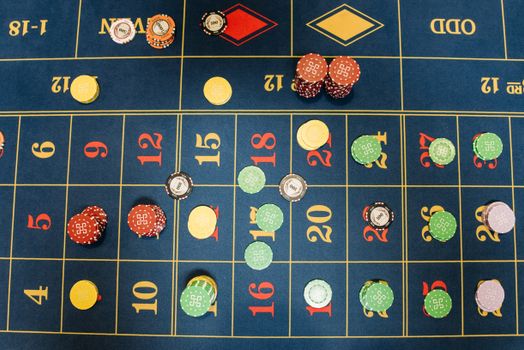
Roulette has fascinated gamblers for centuries, blending luck, anticipation, and strategy into every spin of the wheel. Among the countless betting systems devised to tip the odds, the Martingale strategy has become a household name. But what most players don’t realize is that Martingale isn’t just one set approach—it has several intriguing variants, each designed to tweak risk, reward, and resilience to losing streaks. Understanding these different Martingale strategies, and how effective they really are, can help both new and seasoned roulette players make more informed choices at the table.
The Classic Martingale Strategy Explained
At its heart, the classic Martingale system is elegantly simple: double your bet after every loss on even-money bets (such as red/black, odd/even, or high/low). The idea is that a single win recovers all previous losses plus a profit equal to your original stake. For example, if you start with a $5 bet and lose four times in a row, by the fifth bet you’re wagering $80—but a win gets you back all your lost bets, plus $5 profit.
Here’s a breakdown of the progression for a $5 initial bet:
- 1st bet: $5 (lose, total loss $5) - 2nd bet: $10 (lose, total loss $15) - 3rd bet: $20 (lose, total loss $35) - 4th bet: $40 (lose, total loss $75) - 5th bet: $80 (win, total loss $75 + $80 bet = $155; total return $160, net profit $5)While this system looks foolproof on paper, it has two significant weaknesses:
.png) 1. Table limits: Most casinos cap bets to prevent such exponential escalations.
2. Bankroll limitations: A long losing streak can quickly exhaust even a large bankroll.
1. Table limits: Most casinos cap bets to prevent such exponential escalations.
2. Bankroll limitations: A long losing streak can quickly exhaust even a large bankroll.
Statistically, on a European roulette wheel (single zero), the chance of losing six even-money bets in a row is about 1.36%—not likely, but hardly impossible.
Reverse Martingale (Paroli): Chasing Winning Streaks
The Paroli, or Reverse Martingale system, flips the classic approach: instead of doubling after a loss, you double your bet after each win. The aim is to capitalize on hot streaks while keeping losses minimal. Here’s how it works:
- Start with a base bet (say, $10). - After every win, double your bet. - After a loss, return to the base bet.For example:
- 1st bet: $10 (win, total profit $10) - 2nd bet: $20 (win, total profit $30) - 3rd bet: $40 (lose, total loss $10)Some players set a cap, such as stopping after three consecutive wins, to lock in profits. The biggest advantage of the Paroli is its risk control: you’re only risking your profits from previous wins, not your entire bankroll. However, winning streaks are rare, and a loss ends your run, sometimes just before you reach your profit goal.
Grand Martingale: Higher Stakes, Bigger Risks
The Grand Martingale system raises the stakes by not only doubling after each loss but also adding an extra unit to each new bet. This approach aims to increase profits per cycle, but it comes with steeper risks. Here’s how the sequence looks with a $10 starting bet:
- 1st bet: $10 (lose, total loss $10) - 2nd bet: $30 (double $10 + $10, lose, total loss $40) - 3rd bet: $70 (double $30 + $10, lose, total loss $110) - 4th bet: $150 (double $70 + $10)A win at any stage recovers all losses and yields a profit equal to the last added unit. While this can make wins feel more substantial, the Grand Martingale escalates your bet size and potential losses much faster than the classic system. For example, after only four losses, your cumulative outlay is $260—much higher than the $150 required in standard Martingale with the same initial bet.
Mini-Martingale and Anti-Martingale: Managing Risk and Reward
Not every gambler has the stomach or bankroll for aggressive doubling. The Mini-Martingale introduces a safety mechanism: set a limit to the number of consecutive bets before stopping and accepting a loss. For example, you might choose to never double more than four times. This cap helps reduce the risk of catastrophic losses, but it also means you won’t always recover all losses.
Anti-Martingale, sometimes used interchangeably with Paroli, can also refer to systems where you decrease your bets after a loss and increase after a win, but not necessarily by doubling. This approach is more flexible and can be tailored to suit a player’s risk appetite, with some preferring to increase bets by smaller increments.
Comparing Martingale Variants: Effectiveness and Suitability
Each Martingale variation has its champions and critics. Their effectiveness depends on several factors: table limits, bankroll size, risk tolerance, and personal preference. No variant can overcome the house edge present in roulette, which is 2.7% in European roulette and 5.26% in American roulette due to the double zero.
Here’s a comparative overview:
| Strategy | Progression | Best For | Risk Level | Potential Reward |
|---|---|---|---|---|
| Classic Martingale | Double after loss | Players with large bankrolls | High | Low (small profit per cycle) |
| Reverse Martingale (Paroli) | Double after win | Players preferring lower risk | Moderate | Moderate (profits on streaks) |
| Grand Martingale | Double plus one unit after loss | High rollers seeking bigger wins | Very High | High (more profit per cycle) |
| Mini-Martingale | Limited doublings after loss | Risk-averse players | Lower | Low (accepts some losses) |
| Anti-Martingale | Increase after win, decrease after loss | Flexible, cautious players | Variable | Variable (customizable) |
For example, a study from the University of Nevada found that over 10,000 simulated spins, the classic Martingale resulted in more sessions with small profits but also more frequent catastrophic losses compared to flat betting. The Grand Martingale increased session profits, but the size of average losses nearly doubled.
The Psychological Impact of Martingale Variants
Beyond mathematics, the choice of Martingale variant can deeply affect a player’s experience. The classic and Grand Martingale systems create an illusion of inevitability—most sessions end with a win, but rare losing streaks wipe out previous gains. This leads to emotional highs and lows, and the stress of rapidly escalating bets can be overwhelming.
In contrast, the Reverse Martingale and Mini-Martingale shift the focus toward managing losses and capitalizing on positive momentum. Players using these systems report less stress and longer playing sessions, albeit with smaller, less frequent wins.
Gambling addiction specialists caution that the “chase” mentality encouraged by Martingale variants can be risky for vulnerable players. Setting strict session limits and treating all strategies as entertainment—rather than a path to guaranteed profit—is essential for responsible play.
How Real-World Casino Rules Affect Martingale Strategies
No matter which Martingale variant you choose, real-world casino rules significantly impact their effectiveness. Most casinos set table limits that make it impossible to ride out long losing streaks. For example, if a table’s maximum bet is $500 and you start at $5, you can only double up six times before hitting the limit. The probability of losing six times in a row is about 1.36%, meaning that this scenario is expected to occur once every 74 sessions.
Online casinos sometimes offer higher table limits, but the risk remains. Additionally, some online platforms use random number generators (RNGs), which, while fair, make streaks just as unpredictable as live wheels. The house edge—2.7% on European wheels, 5.26% on American—remains unbeatable over the long run, regardless of betting system.
Final Thoughts on Martingale Variants in Roulette
Exploring the different Martingale variants in roulette reveals that while each offers a fresh take on risk and reward, none can guarantee long-term profits or overcome the house edge. The classic Martingale offers frequent small wins offset by rare, devastating losses. The Reverse Martingale provides a safer, more exhilarating ride but requires lucky winning streaks. Grand Martingale ramps up the stakes, offering bigger wins and bigger risks, while Mini-Martingale and Anti-Martingale focus on risk management and player comfort.
Ultimately, the best strategy is one that matches your bankroll, risk tolerance, and gambling goals. No system can change the fundamental odds of roulette, but understanding how these variants work can help you play smarter and enjoy the game for what it is: a thrilling blend of chance and strategy.